How Nike’s Diversity Efforts Made It a Trump Target
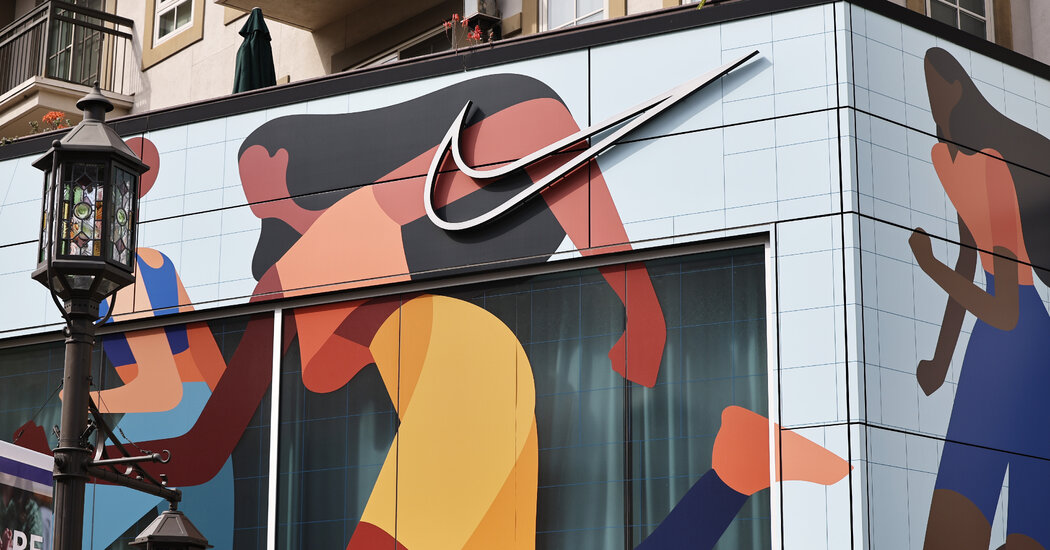
In May 2024, Andrea Lucas, a commissioner on the Equal Employment Opportunity Commission, sent a 26-page memo to several agency officials, arguing that Nike, the world’s largest sportswear company, had systematically discriminated against white employees and job applicants for years.Nike had set targets for diversity in its U.S. work force, wrote Ms. Lucas, who was appointed to the commission by President Trump during his first term. She said the company had used internal programs to boost racial representation even as it appeared to have culled white executives through layoffs.“If the race of candidates has influenced any of Nike’s employment decisions,” including its training programs, Ms. Lucas wrote, then the company violated federal law.“Time is of the essence to prevent future potential large-scale unlawful discrimination,” Ms. Lucas said in the memo, a copy of which was reviewed by The New York Times. That same day, she filed a charge that started a civil-rights investigation into Nike.Few major companies had more openly embraced a commitment to diversity than Nike, not only in its advertising campaigns but in its work force. Those efforts landed the company in Ms. Lucas’s sights. As she rose to power at the E.E.O.C. — culminating in her role as the commission’s chair — her pursuit of Nike became a road map for similar investigations.For decades, the E.E.O.C. investigated employers whose hiring and promotional practices may have been unfair on the basis of race, sex, disability or national origin. The agency also supported employers trying to increase diversity in their hiring pools following years of discrimination where qualified applicants were passed over for roles.Ms. Lucas has redirected that work. In her six years at the commission, and in particular since becoming chair last year, she has targeted companies whose practices she says have been unfair to white men. Her efforts have been buoyed by backlash to the profusion of diversity, equity and inclusion programs that followed the 2020 murder of George Floyd.She has said she wants to restore “equal treatment” in the workplace. Her detractors have accused Ms. Lucas of a cynical effort to carry out the policy goals of the Trump White House.A spokesman for the E.E.O.C. declined to respond to a detailed set of questions for this article, citing ongoing litigation in the Nike investigation.The investigation was unusual from the outset. The vast majority of the agency’s cases begin with a complaint from an employee. There was none in this case. Even Ms. Lucas’s 26-page memo was atypical: Commissioners don’t usually offer reams of footnoted evidence when they file a charge.At first, the Nike investigation seemed on course for a discreet, painless resolution. In early January 2025, in the final weeks of the Biden administration, Nike signed a settlement agreement with the E.E.O.C. But shortly after Mr. Trump took office, the agency withdrew the agreement, without explanation.The investigation became public early this year, when the agency filed a motion in federal court to enforce a subpoena — a move that Nike said was unnecessary given that it had been cooperating with the investigation through “extensive, good-faith participation.”It was a swift, public escalation. While the court battle is technically still just about a subpoena, the broader questions at hand — about Nike’s obligations as an employer, the powers of the E.E.O.C. and the civil-rights implications of diversity programs — could progress through federal courts, should either side decide to file a lawsuit.Employment lawyers, along with current and former E.E.O.C. officials of both parties, say Ms. Lucas is most likely setting the stage for a Supreme Court case — one that could dismantle the legal infrastructure for diversity and affirmative action programs in the workplace.Ms. Lucas has said as much. The agency’s new national enforcement plan, released last month, lists as one of its top priorities “cases having the potential of promoting the development of law,” including the analysis of D.E.I. programs following “recent Supreme Court precedent” in cases that made it easier for employees to bring civil rights claims against their employers, and which ended affirmative action in higher education.“They are trying to change decades of settled precedent on these areas, and I do think they would like to get to the Supreme Court on a range of these issues,” said Jenny Yang, a Democrat and former chair of the E.E.O.C. “But I also think they are trying to intimidate employers.”Nike sets goals, and becomes a targetNike’s efforts to foster diversity at the company began in earnest in 2002, when the company, then run by Phil Knight, its co-founder, established an Office of Global Diversity and said it wanted to “make diversity a competitive advantage.”In her May 2024 memo laying out the evidence against Nike, Ms. Lucas pointed to a 2018 message from the company’s human resources department.At the time, women at Nike had complained about sexual harassment and a pervasive “boys club” culture. They polled their colleagues and sent Mark Parker, then the company’s chief executive, a package full of the surveys. The ensuing upheaval led to the resignation of several high-ranking executives.Monique Matheson, then the chief H.R. officer, told employees that Nike needed to increase representation of women and people of color while nurturing a more inclusive culture.“Our hiring and promotion decisions are not changing senior-level representation as quickly as we have wanted,” Ms. Matheson wrote to Nike staff.The company’s stated commitment to diversity in its work force, and its yoking of commercial interests to social justice causes, was boosted by the presence of some high-profile athletes on Nike’s roster. In 2018, the company started an ad campaign featuring Colin Kaepernick, the football star who knelt during the national anthem to protest police brutality.In 2019, Nike established a Serena Williams Design Crew, an incubator for young designers. The program would add a new crop of apprentices each year, with fashion collections sold to the public, and was billed as a way to boost diversity in the design industry.“I wanted to see more people who looked like me,” Ms. Williams, the tennis star, said at the time.The following year, the murder of George Floyd set off a public outcry for a racial reckoning that reached boardrooms, which adopted — and promoted — diversity, equity and inclusion initiatives. Affinity groups, internal training sessions and statements of diversity became part of corporate culture across industries.At Nike, the efforts appeared to work. In 2023, Bloomberg reported that Nike was “one of the most clear-cut examples” of a broader trend in corporate America in hiring racial minorities in the wake of the Black Lives Matter movement. Citing E.E.O.C. data, Bloomberg wrote that Nike had “added Black, Hispanic and Asian people across almost every job category,” even as it lost white workers.In March 2024, the company said it had increased racial and ethnic minority representation in its U.S. corporate work force to 41 percent from 32 percent.That put Nike in Ms. Lucas’s cross hairs.After Mr. Trump lost the 2020 election, Ms. Lucas became one of two Republicans on a five-member board controlled by Democrats.She became known inside the agency for initiating so-called “commissioner charges” — a rare type of investigation without underlying employee complaints, according to current and former agency officials. She and her staff also developed a reputation for hounding local investigative offices about cases she cared about, and having her staff delve into case files, which current and former E.E.O.C. employees said was highly unusual.When E.E.O.C. commissioners file a discrimination charge, they are required simply to attest, under penalty of perjury, that they have evidence of a civil rights violation.Ms. Lucas, however, offered a full legal memorandum, with footnotes citing news articles and company records. She did the same for investigations into Columbia University and the University of Pennsylvania — also cases she initiated without an employee complaint — according to materials reviewed by The Times.In her memo about Nike, Ms. Lucas quoted from the company’s own H.R. materials.“All these programs reportedly focus on increasing minority candidates, potentially to the exclusion of white candidates,” Ms. Lucas wrote. “Given Nike’s focus on numerical target goals for minority recruiting and (as demonstrated below) its success in achieving those numbers, these programs should be examined for both potential disparate treatment and impact.”A scuttled settlementThe Nike investigation was first assigned to the Seattle field office, which covered the area of Nike’s headquarters in Beaverton, Ore. As is required by law, the inquiry proceeded in secret.After Mr. Trump won the election that November, there was a push at the E.E.O.C. to finish cases before the next administration took over, as is often the case, people familiar with the agency said.In December 2024, Annalie Greer, an investigator in the Seattle field office, asked Nike for a narrow set of records: Specifically, she wanted proof that Nike’s programs were open to all employees, and that one of its leadership programs had been discontinued.Under the agreement — which was to remain sealed and confidential — Nike attested that its training and development opportunities would remain open to all employees and that it would encourage all to participate. The commission, in turn, would end the investigation.Nike signed the agreement and returned it to Ms. Greer on Jan. 9. Four days later, Ms. Greer responded to Nike’s lawyers, saying she had submitted it for review.“Please keep us updated and let us know if you need any additional information,” a Nike lawyer responded. All that remained was for the director of the E.E.O.C.’s Seattle field office to sign the agreement. That does not appear to have happened.A week later, Mr. Trump returned to office. He fired the E.E.O.C.’s chair, a Democrat, and one of two remaining Democratic commissioners. And he named Ms. Lucas the acting chair.Nike’s case suddenly took a turn.A month later, an E.E.O.C. investigator in the San Francisco office, Ahlam Abdellatif, called Nike’s labor lawyers. She was taking over the investigation, and the proposed settlement had been withdrawn.At Nike headquarters, executives were shocked by the abrupt reversal. As far as they were concerned, the case had been closed, according to a person familiar with the matter.Instead, the agency sent a new, broader request for information, seeking details on “all programs” put in place since January 2022 that aimed to increase diversity in Nike’s U.S. work force; job descriptions for the company’s leadership; details on executive compensation; criteria for layoffs; and demographic and pay data provided to executives.The request encompassed the Nike program attached to Ms. Williams and at least 15 more company projects, including mentorship programs, education initiatives and internships. It probed an executive leadership academy run by McKinsey & Company, the consulting firm. At Converse, the Nike-owned brand known for its Chuck Taylor sneakers, investigators asked about a design team program and an employee resource group.“At Nike, we constantly test and learn because we believe the best innovations stem from this approach,” a spokeswoman for Nike said in a statement in response to a question on the status of its diversity programs. “As part of this, we regularly re-evaluate programs and may stop, suspend or change them for many reasons.”Nike’s lawyers objected to the withdrawn agreement, and raised questions about “the procedural integrity and continuity of the investigation.” In June 2025, the E.E.O.C. sent a third broad request for information, this time reaching back to 2018 and including demands for interviews with employees. The commission gave Nike a week to respond. Nike’s lawyers said the demand “reflects an unjustifiably coercive and overreaching approach to this investigation.”The back and forth continued until Sept. 30, when the top official in the agency’s St. Louis district — the investigation had been moved yet again — served Nike with a subpoena.In its court filings, Nike has described these moves as irregular and “improper forum shopping.” Current and former E.E.O.C. employees say it is evidence that Ms. Lucas was trying to find investigators who might be more amenable to doing cases her way. The E.E.O.C., in its filings, has defended its choice of St. Louis.A week after the subpoena, Amanda A. Sonneborn, a lawyer for Nike, asked for it to be revoked. She objected on several grounds, including that Ms. Lucas’s charge tracked closely to a public complaint against Nike that was filed with the E.E.O.C. by America First Legal, a conservative group founded by a top Trump official, Stephen Miller.“The charge issued by acting chair Lucas closely mirrors A.F.L.’s request and appears to be based substantially on its assertions,” Ms. Sonneborn wrote.Since its founding in 2021, A.F.L. has filed scores of complaints against companies with the E.E.O.C., and has been involved in several cases that have reached the Supreme Court. The court recently agreed to hear a case, following a petition by A.F.L., that would allow parents to challenge state laws supporting confidentiality for minors seeking gender-affirming treatment.Last year, the Supreme Court ruled unanimously in favor of a straight woman who twice lost positions to gay workers, saying that lower courts had been wrong to apply heightened standards to prove discrimination because she was a member of a majority group.A.F.L. wrote an amicus brief in that case, which Justice Clarence Thomas quoted in his concurring opinion. Justice Thomas, who served as the chair of the E.E.O.C. in the 1980s, is a hero to Ms. Lucas; she has called him “the very finest living American.”Going publicIn February, the commission’s three-page charge against Nike became public, when the E.E.O.C. filed a motion in federal court in Missouri to force Nike to cooperate with the September subpoena.Nike asked for the case to be dismissed or transferred to Oregon. The company has also contended that it had been producing requested documents on a rolling basis for months.The E.E.O.C. responded that the court “should reject Nike’s effort to delay the EEOC’s investigation, deny its motion, and expediently enforce the subpoena.”The public move against Nike was one of several E.E.O.C. actions related to D.E.I. programs at prominent companies.In February, the agency sued a New Hampshire Coca-Cola distributor over a women’s retreat it hosted at a Connecticut casino in 2024, saying it deprived male employees of equal employment opportunities. (Coca-Cola denies wrongdoing and is challenging the suit.)In March, the E.E.O.C. announced a settlement with Planned Parenthood of Illinois, which would pay $500,000 to resolve claims that the group’s “affinity caucuses” were illegal segregation and that its D.E.I.-related training sessions led to the harassment of white employees.And in May, the agency filed a federal lawsuit against The New York Times, saying the company had unlawfully discriminated against a white male employee who did not get a sought-after promotion. (The Times has denied wrongdoing and filed a countersuit.)Nike and the E.E.O.C. are scheduled to appear in court next month; according to a joint motion filed on Wednesday, Nike has continued to produce documents responding to the subpoena.At Nike, Ms. Williams’s design program ended last year, when the five-year arrangement expired, according to a person familiar with the agreement. Among the final items the designers developed was a sneaker-loafer hybrid called the Air Max Phenomena, which was released last July.It’s unclear what, if any, changes Nike has made to its other diversity programs since the investigation started. Many projects, including one that selects graduate students for marketing internships, are still running.
Diterbitkan : 2026-07-16 16:27:00
sumber : www.nytimes.com